
 Skip to content
In modern homes, the kitchen is rarely just a kitchen. It has become the centre of daily life a place for cooking, entertaining, working, talking, gathering and relaxing. This is why the way we divide a kitchen matters so much. Homeowners want openness, natural light and connection, but they also want the option to close the space when needed. This is where pocket doors in the kitchen become one of the most elegant and practical design solutions.
A pocket door is a door that slides neatly into a hidden wall cavity. Instead of swinging open like a traditional hinged door, or sliding across the wall like a standard sliding door, the panel disappears into the wall when open. The result is clean, architectural and incredibly space-saving.
For kitchens, this can be a game changer.
Why pocket doors work so well in kitchens
The kitchen is one of the busiest rooms in the home. There are cupboards, appliances, islands, stools, worktops, circulation routes and often a connection to a dining room or living area. A traditional door can sometimes feel awkward because it needs swing space. It can interrupt the layout, block furniture or make the room feel smaller.
A steel glass pocket door solves this beautifully. When open, it disappears. When closed, it creates a defined room. You do not lose wall space, floor space or visual flow.
This makes pocket doors especially useful between a kitchen and dining room, kitchen and hallway, or kitchen and living room. They allow the home to feel open during the day, but more private and calm when cooking, entertaining or relaxing.
The beauty of steel and glass pocket doors
A pocket door does not have to be plain or hidden in style. With bespoke steel doors, it can become a quiet architectural feature. A slim steel frame gives the kitchen structure and elegance, while glass keeps the room bright.
This is why internal steel glass doors are so popular in kitchen design. They separate without making the space feel closed. They create a boundary, but still allow light to move through the home.
For a kitchen, this is important. Natural light changes everything. It makes the space feel larger, warmer and more inviting. A solid door can block that feeling, but a glass pocket door keeps the visual connection alive.
The steel frame adds another layer of design. Black steel creates contrast and definition. Bronze or warm metal finishes feel softer and more luxurious. A slim frame can look modern and minimal, while a more detailed grid can bring a classic, industrial or heritage feel.
With a bespoke design, the door is not simply chosen from a standard size. It is created around the architecture of the home.

A perfect solution for open-plan living
Many people love open-plan living, but they also discover the practical challenges later. Cooking smells travel. Noise travels. The kitchen can feel exposed when guests arrive. The mess from preparation can be visible from the dining table or living room.
This is one of the biggest reasons homeowners choose pocket doors for open-plan kitchens. They offer flexibility. You can enjoy an open space when you want connection, then close the doors when you want atmosphere, privacy or quiet.
Imagine preparing dinner while guests sit in the dining room. With the pocket doors open, the space feels social and relaxed. Later, when the meal is served, the doors can slide closed and the dining room suddenly feels more intimate.
That flexibility is what makes kitchen pocket doors so valuable. They do not force you to choose between open-plan and separate rooms. They give you both.
Ideal for kitchen extensions
Pocket doors are also a beautiful option in a kitchen extension. Many extensions are designed to bring in light through rooflights, garden glazing and large external doors. But inside the home, the transition between old and new spaces can sometimes feel difficult.
A bespoke steel pocket door can help define that transition. It can sit between the original hallway and the new kitchen extension, or between the kitchen and a snug, dining area or utility space.
Because the door slides into the wall, it keeps the extension feeling clean and spacious. It does not interrupt the view or fight with the architecture. It simply gives the home more control.
For London homes and period properties, this can be especially useful. Many older houses have narrow hallways, smaller rooms or unusual wall openings. A made-to-measure pocket door can be designed to suit the proportions of the property, rather than forcing the room to adapt to a standard door.
Pocket doors and privacy
In a kitchen, privacy is not always about hiding the room completely. Sometimes it is about soft separation. A steel framed glass pocket door can create a gentle division while still keeping the space elegant and bright.
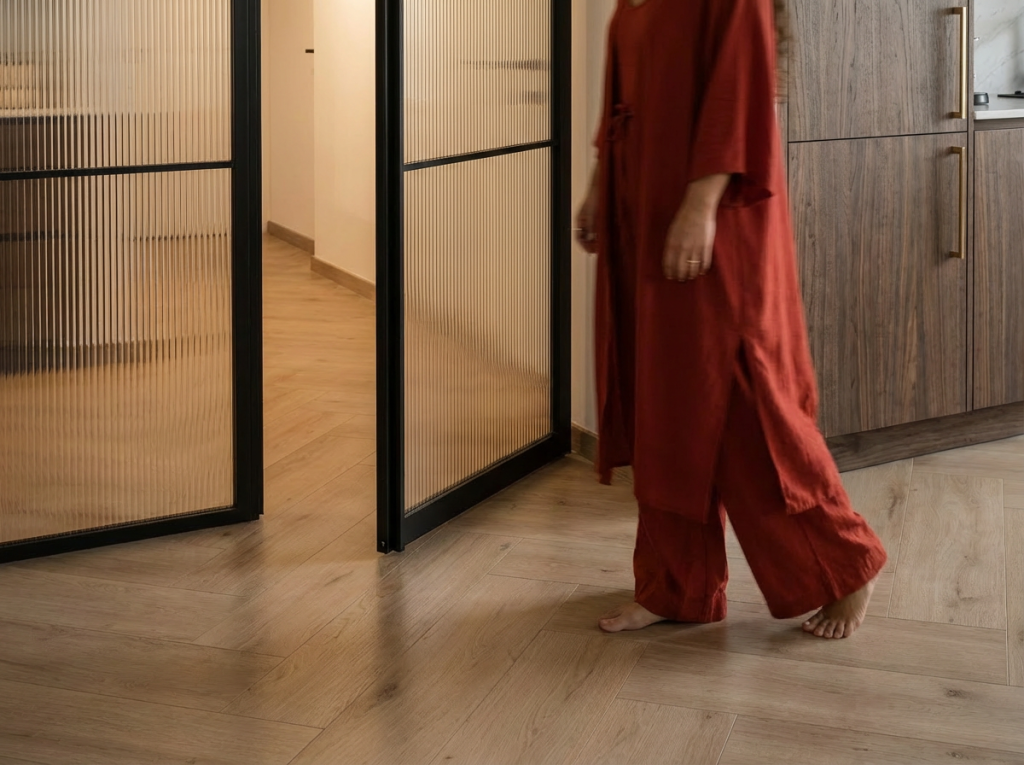
Clear glass is perfect when you want maximum light and visibility. Reeded or fluted glass is ideal when you want more softness. It blurs the view slightly, hides everyday movement and adds texture. Smoked glass can create a moodier, more dramatic look. Frosted glass can work well near utility areas or pantry entrances.
This is where a bespoke approach matters. The glass type changes the feeling of the whole room.
A clear glass pocket door feels open and architectural. A ribbed glass pocket door feels softer and more private. A bronze glass pocket door feels warm and luxurious. Each option creates a different mood.
Why bespoke matters
One of the biggest advantages of bespoke steel doors is control. You are not limited to one fixed design. You can choose the height, width, frame thickness, glazing pattern, handle style, colour and finish.
This is especially important for kitchens, because every kitchen has different proportions. Some need tall doors to match ceiling height. Some need narrow pocket doors to work within a compact opening. Some need double pocket doors to create a wider entrance between the kitchen and dining room.
With a bespoke system, the door can be designed around the kitchen layout, the island, the dining table, the lighting and the natural flow of the home.
You do not have to design your kitchen around the door. The door is designed around your kitchen.
Do pocket doors need planning early?
Yes, pocket doors usually need to be considered earlier than standard doors. Because the panel slides into a wall cavity, the wall needs to be suitable for the pocket system. This may affect structure, electrics, switches, sockets and wall depth.
That does not mean pocket doors are difficult, but they do need proper planning. For renovations, kitchen extensions and high-end interior projects, it is best to decide on the pocket door system before the final building work is complete.
This allows the door to sit beautifully within the architecture. When done well, the result feels seamless as though the pocket door was always meant to be there.
Are pocket doors only for modern homes?
Not at all. Steel pocket doors can look beautiful in both modern and traditional interiors.
In a contemporary kitchen, they add clean lines and a refined architectural feel. In a classic British home, they can create contrast against cornicing, timber floors, marble worktops and traditional cabinetry. In a period renovation, they can feel like a modern layer that respects the character of the house.
The key is proportion. A simple steel frame can look calm and minimal. A grid design can add more detail. A warmer finish can soften the contrast. This is why bespoke design is so valuable — it allows the door to match the personality of the home.
Pocket doors for pantry, utility and back kitchen spaces
Pocket doors are not only useful between the kitchen and living room. They are also excellent for pantries, utility rooms, laundry rooms and secondary kitchens.
A pantry door can disappear when open, making it easy to move in and out while cooking. A utility room can be closed when noisy appliances are running. A back kitchen can be hidden when guests are over.
For these areas, internal steel pocket doors offer both style and function. They keep the main kitchen looking beautiful while giving practical areas their own boundary.
Why homeowners choose pocket doors in kitchens
People choose pocket doors in kitchens because they want flexibility. They want light, space and openness, but they also want the option to close the room when life gets busy.
They are ideal for homes where every detail matters. They save space. They improve flow. They add privacy. They keep natural light moving. They make a kitchen feel more considered and more luxurious.
Most importantly, pocket doors give control.
Open, the kitchen feels connected. Closed, it feels calm and defined. That small movement can completely change the mood of the home.


A steel glass pocket door is one of the most elegant ways to divide a kitchen without making it feel smaller. It gives the home freedom, light and flexibility, while adding architectural detail that feels timeless.
For kitchen extensions, open-plan layouts, dining rooms, pantries and living spaces, bespoke steel pocket doors offer a refined solution that works with the way people really live.
They are not just doors. They are part of the design, the atmosphere and the daily rhythm of the home.

 Optimized by Seraphinite Accelerator